
- There are reports that it has a positive effect on cognitive performance.
- The evidence score is 50, and reliability is moderate.
- This content is intended for people interested in concentration and brain function.
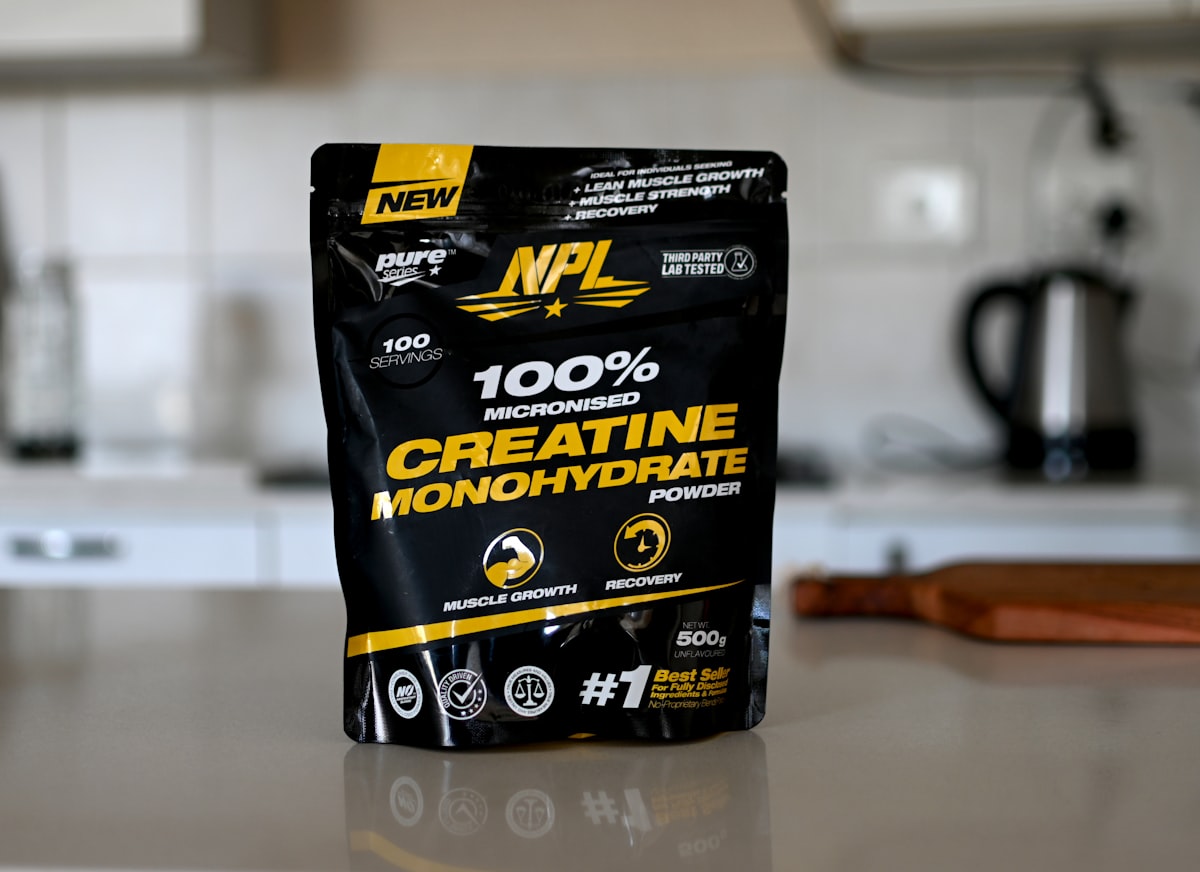
Creatine is an ingredient discussed in the context of supplementation.
It has been examined in relation to cognitive performance.
Studies have reported that creatine has a positive effect on cognitive performance (5 studies, reliability is moderate).
Until now, attention has often focused on its effect on muscle, but recently it has also been examined for a possible connection to brain activity. Specifically, research has been conducted on aspects such as the smoothness of performing tasks and the speed of thinking.
Research conducted in a sleep-deprived setting has suggested support for cognitive function.
In a small-scale study of about 19 participants, it was reported that when sleep was insufficient, a positive effect was seen on mood and performance on a specific task. This was conducted as a randomized controlled trial (a reliable research method in which participants are randomly divided to compare effects). In other words, this suggests the possibility of an effect on the brain under conditions of sleep deprivation.
The effect of combining creatine with caffeine has also been investigated.
A small group of 12 male athletes in training took the supplement for 7 days. In this case, scores improved on a letter-and-color judgment test. This was carried out in a form close to a double-blind, placebo-controlled trial (a method that prevents bias by ensuring participants don't know which substance they are drinking).
Interesting results have also come from studies of adults going about their daily lives.
In a study where 123 men and women took creatine for 42 days, an analysis was performed using Bayesian statistics (a method that estimates results probabilistically from data). The results supported a small beneficial effect. A notable feature of this study is that about half of the participants were vegetarians.
However, not everyone will feel the same effect.
A report using a systematic review (a method that compiles and analyzes many existing studies to look for an overall trend) found no effect in healthy individuals. The Bayesian statistical analysis suggests a small beneficial effect, but there are also situations in which no effect appears. It should also be recognized as a fact that results vary between studies.
| Study | Design | Number of participants | Duration | Main result |
|---|---|---|---|---|
| Psychopharmacology (2006, PMID:16416332) | Randomized controlled trial (RCT) | 19 | Unknown | A positive effect was reported |
| Nutrients (2024, PMID:38542677) | Randomized controlled trial (RCT) | 12 | 7 days | A positive effect was reported |
| Scientific Reports (2024, PMID:38418482) | Randomized controlled trial (RCT) | Unknown | Unknown | A positive effect was reported |
| European Journal of Sport Science (2019, PMID:30086660) | Systematic review | Unknown | Unknown | No clear association was found |
| BMC Medicine (2023, PMID:37968687) | Randomized controlled trial (RCT) | 123 | 42 days | A positive effect was reported |
The research includes 19 sleep-deprived subjects, 12 male athletes doing resistance training, subjects undergoing sleep deprivation, healthy individuals, and 123 mixed-sex adults (about half of whom were vegetarians). Combined, these studies cover a total of 154 participants.
The research includes people under specific conditions or with specific characteristics, such as sleep deprivation, engaging in resistance training, or following a vegetarian diet.
This data includes 4 randomized controlled trials (RCTs) and 1 systematic review.
Regarding the effect on cognitive performance, while some studies have found positive results, there are also reports finding no effect.
Studies conducted under specific conditions, such as sleep deprivation, are also included, showing responses across a variety of situations.
Is there an effect from taking creatine during sleep deprivation?
A: Studies have reported that creatine may have a positive effect on cognitive performance, processing speed, or mood. This tendency has been seen under conditions involving sleep deprivation.
What research results exist on athletes taking creatine?
A: There are reports of enhanced cognitive function in male athletes doing resistance training. Improved scores have been shown on specific tests.
Are creatine's effects consistent across studies?
A: While some study results show a favorable effect on cognitive performance, there are also reports finding no effect. It should be noted that results differ between studies.
Reports from 5 studies suggest that creatine may have a positive effect on cognitive performance. However, a systematic review analysis also found no effect, and depending on individual differences and circumstances, no effect may appear. The content of this article is based on the scale and conditions of the underlying research. To understand your own condition, please also try the self-check assessment.